
Trace Prentiss County Former Owners by Era
Work backward from the newest reliable parcel record. That single move turns a Prentiss County property search into a chain. It works instead of a guess. The Chancery Clerk holds the official land index. Treat the online version as a locating aid. The courthouse index and certified instruments control when versions disagree. Online coverage runs 2008 to the present in the directory evidence. Earlier owners call for a book, a page, or a plat. The courthouse index or an archival lead can help there too.
| Source | Years It Covers | Where Held | What It Shows |
|---|---|---|---|
| Chancery land index | 2008 to present online lead | Web portal and official courthouse index | Parties, instrument type, filing date, parcel fields and book/page leads |
| Virtual Index and deed books | Earlier range not published | Chancery Clerk | Type, book and page routes into older recorded instruments |
| Map and Plat Book | Instrument-specific | Chancery Clerk | Subdivision, lot, block, roads and recorded geometry |
| Archival collections | Selected historic holdings | MSU, MDAH and Northeast Regional Library | Land-sale, deed, docket, estate and local-history finding aids |
Post-2008 transfers start online. Confirm them at the courthouse. For a longer Prentiss County history, carry the last known book and page into the Virtual Index and the older bound volumes. A plat keeps the chain tied to the same lot when road names or mailing addresses change.
Build a Prentiss County Deed-Chain Timeline
Give every conveyance its own row. Stay put until the legal description fits the parcel. Dates alone can mislead, because execution and recording can fall on different days. The table below is a research format, not a statement about any particular property.
| Transfer Date | Grantor to Grantee | Deed Type | Book/Page |
|---|---|---|---|
| Newest verified filing | Exact indexed names | Warranty, quitclaim or other deed | Record the citation |
| Prior acquisition | Earlier owner to later owner | Read the instrument | Match the prior reference |
| Earlier book entry | Names as recorded then | Do not assume from code alone | Use courthouse or Virtual Index |
A running log stops mix-ups. It keeps a deed of trust, release, or substitution from being mistaken for an ownership transfer. Missing years become visible. So do name changes, before they turn into false conclusions about former owners.
Prentiss County Previous Owners Before 2008
Pre-2008 owners need a different route. The land-title directory puts the start of online land records at 2008. The public Chancery Virtual Index takes a record type, book, and page, but the county publishes no exact earliest scanned range. A blank web result does not end the chain.
Coverage limit. Online coverage is a 2008-to-present lead; ask the Chancery Clerk which official book or index continues an older chain.
The Northeast Regional Library offers local-history and genealogy resources, microfilm, and copy service. Mississippi State University lists Prentiss County materials including Land Sale 1836, Deed Records 1880–85, a Chancery Court docket index, and an estate-case index. Those sources help locate a citation. Verify the deed with the original custodian.
See the Historic Prentiss Book-and-Page Route
The official Virtual Index entry page shows the book-and-page search route to use once a citation is in hand.
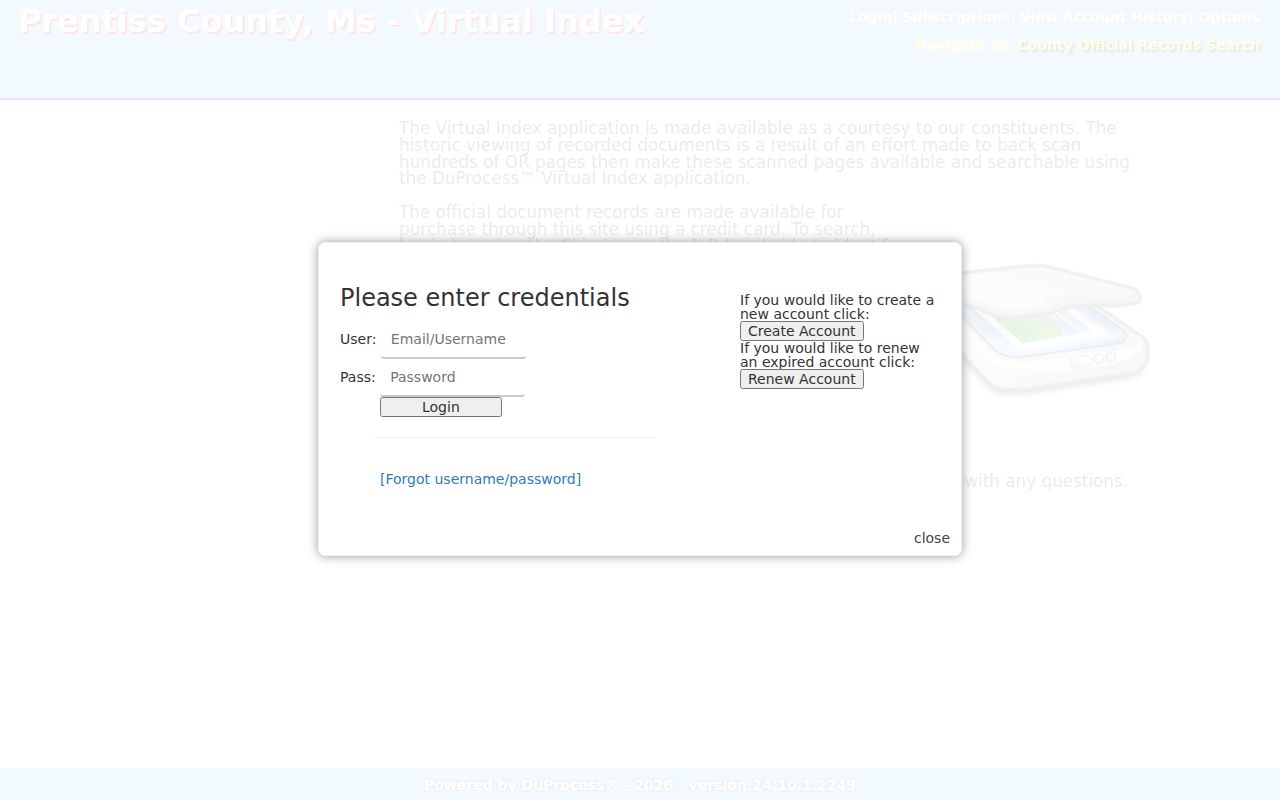
A citation comes first. Pull it from the current deed, the courthouse index, or a finding aid, because this route is not a broad address search for every past owner.
Walk the Prentiss County Chain Backward
Use the Delta tax card only to identify the parcel, PPIN, owner string, situs, legal text, and any book/page reference. Then move to the Chancery records. The current deed names the grantee who received the land and the grantor who conveyed it. Search that grantor next, as an earlier grantee.
- Find the deed into the current owner and confirm parcel, legal description and filing date.
- Copy the grantor name, prior-instrument reference, book/page and any vesting capacity exactly.
- Search that grantor as a grantee in an earlier date range, testing initials and recorded name variants.
- Repeat until the web coverage ends, then take the last citation to the official index and older books.
- Grantor / grantee
- The party conveying an interest and the party receiving it.
- Chain of title
- The linked sequence of instruments affecting ownership of the same land.
- Reverse index
- An index organized from the receiving party back toward the conveying party.
- Quitclaim / warranty deed
- Different conveyance forms whose legal effect must be read in the instrument.
Names That Complicate Prentiss County Prior Owners
Older chains often turn on how a name was indexed. Try initials, former names, and corporate suffixes. Use the forms ET UX and ETUX when the record points that way. Never expand an abbreviation into a legal conclusion. Read the deed itself for the exact parties and their capacity.
Estates, trusts, executors, administrators, guardians, and corporations can all break a tidy person-to-person sequence. Search the decedent and fiduciary names. Then check Chancery estate or court records. Look there for the authority behind a commissioner, trustee, or fiduciary deed. The deed and any supporting order should point to the same land.
Separate Former Owners From Security Filings
The Prentiss portal holds deeds, deeds of trust, assignments, cancellations, modifications, partial releases, substitutions of trustee, tax-sale documents, judgments, and lis pendens. Not all of them convey ownership. A deed of trust secures financing. Its cancellation usually records a release, not a new owner of record.
Filter by party, date, and instrument type. Then confirm the returned image or certified record before trusting it. For a disputed link, compare the legal description. Match the lot and block, section-township-range, acreage, PPIN, and prior reference. The Prentiss County deed records page covers fuller deed-search mechanics.
Old Roads and Prentiss County Ownership History
A mailing address is weaker than a legal description. Rural land can hide under an old road, a nearest neighbor, a quarter-section, or a later 911 address. Keep each version as written. Forcing it into today's postal form breaks the chain, so search a distinctive legal fragment in the Chancery index and test the parcel and PPIN in Delta.
Historic newspapers add phrases like trustee's sale, commissioner's sale, partition, or notice to creditors. Treat them as leads, not proof. A recorded instrument settles the question. For a subdivided tract, the Map and Plat Book can show phases, lots, and roads that explain why an earlier description differs.
Verify Every Prentiss County Ownership Link
Every link in an ownership chain deserves the same scrutiny. Save the instrument number, book and page, and filing date. Record the exact grantor and grantee. Add the legal description, any capacity shown, and a prior reference. Note what kind of source you relied on. It might be a bare index result, an informational image, an official courthouse image, or a certified copy. That distinction matters most when two people share a name. It also matters when an estate cycled through several fiduciaries.
Match more than the street address. Compare subdivision, lot and block, section-township-range, acreage, parcel number, and PPIN. A later parcel can come from a split or a merger. So an old deed description may cover more or less land than today's tax account. When identifiers refuse to line up, ask the Assessor about it. Ask whether the account has a parent or child parcel.
A break in the chain is not permission to guess. Search both sides of the gap. Test recorded name variants. Ask the Clerk which official index covers that book and period. The finished former-owner history should show its evidence and state plainly where it stops.
How Far Back Prentiss County Former Owners Go
The county publishes no exact earliest year for every Prentiss County book series. It offers none for the Virtual Index either. The record vocabulary does include Original Entries–Patents and a Sectional Index. Both can yield land-origin leads. Archival holdings reach into the nineteenth century. Old depth, though, is no promise of an unbroken chain for one particular parcel.
No courthouse fire or countywide loss of land records appears in any official account. If a sequence jumps, ask the Clerk about the missing volume, an alternate index, a plat, a patent, or a docket. Don't reach for a dramatic explanation. Record each unresolved step. A careful history can say where the evidence stops. It need not guess who the former owners were.
Lawful use. Research previous owners for title, estate, purchase or house-history work; never use property records to target or harass a person.